Simple Leaf Pattern: Clean, Versatile Design
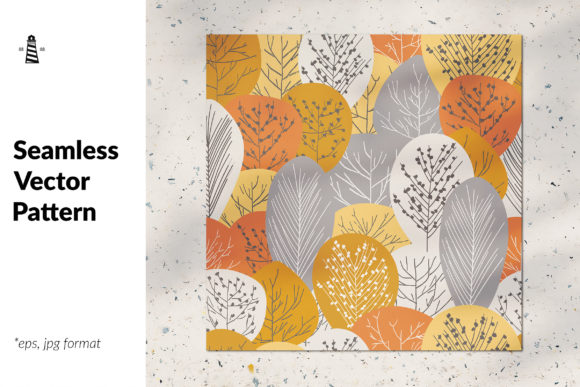
A Simple Leaf Pattern is a minimalist, repeatable visual motif inspired by the natural form of a single leaf—often stylized with smooth curves, balanced symmetry, and gentle negative space. It’s not botanical illustration or hyper-realistic foliage; it’s distilled essence: one shape, thoughtfully drawn, designed to scale, tile, or layer without visual fatigue. You’ll find it in textile prints, website backgrounds, packaging motifs, educational flashcards, ceramic decals, and even laser-cut wood templates.
Why This Pattern Fits More Than One Purpose
What makes a Simple Leaf Pattern resonate across such different lives isn’t just its visual calm—it’s how quietly adaptable it is. A graphic designer doesn’t need the same thing from it as a kindergarten teacher or a small-batch soap maker. Their goals differ. So do their constraints.
For Beginners Learning Design or Craft
If you’re just starting with digital tools like Canva or Illustrator—or even cutting paper by hand—a Simple Leaf Pattern offers low-pressure entry. Its repetition builds confidence: once you understand how one leaf sits, you can mirror, rotate, or offset it predictably. There’s no complex shading, no perspective to master, no color theory required to begin. Try tracing a single leaf outline onto tracing paper, then stamping it in a grid using watercolor ink. That’s enough to make stationery, gift tags, or a wall border. What matters most here is ease of use and learning value: it teaches rhythm, spacing, and visual consistency without overwhelming detail.
For Educators and Parents
In early childhood or special education settings, a Simple Leaf Pattern supports pattern recognition, fine motor development, and nature-based learning—all without cognitive overload. Unlike intricate floral repeats, its clarity helps learners distinguish figure from ground, track sequences, and anticipate what comes next. One teacher uses laminated leaf cutouts to build ABAB sequences on a whiteboard; another embeds the same shape into phonics cards (e.g., “L is for leaf”) while keeping the background uncluttered. For them, clarity, reproducibility, and calm visual tone outweigh decorative flair.
For Small Business Owners & Makers
Think of a ceramicist printing mugs, a candle brand labeling jars, or a boutique curating reusable produce bags. These creators often juggle design, production, and budget—and they need patterns that translate cleanly across materials and scales. A Simple Leaf Pattern holds up when printed at 1 cm tall on a tea towel label or enlarged to 30 cm across a tote bag. It avoids thin lines that vanish in screen printing or gradients that shift unpredictably between dye lots. One soap maker told us she chose this pattern because her printer confirmed it would reproduce faithfully—even on kraft paper labels with soy-based ink. Here, reliability, cost efficiency, and cross-medium flexibility are non-negotiable.
For Digital Creators & Marketers
Web designers, newsletter authors, and social media managers turn to Simple Leaf Pattern for subtle texture—not distraction. It works where bold graphics might compete with text or CTAs. A wellness blog might use it as a light watermark behind testimonials; a SaaS company could animate a single leaf rotating gently in a loading state. Because it’s geometrically straightforward, it loads fast, scales crisply on retina displays, and adapts easily to dark or light mode. No SVG bloat. No font dependencies. For these users, speed, accessibility, and presentation integrity matter more than ornamental richness.
For Hobbyists & Home Decor Enthusiasts
Whether stenciling a headboard, embroidering pillowcases, or arranging pressed leaves into framed grids, hobbyists lean into the pattern’s tactile friendliness. It invites variation without demanding expertise: swap green for terracotta, flip every third leaf, leave intentional gaps for breathing room. One quilter shared how she used a Simple Leaf Pattern as a foundation for improvisational piecing—cutting fabric scraps just slightly larger than the shape, then nesting them freehand. That kind of open-ended play only works when the base motif feels generous, not prescriptive. Their priority? Creativity, personal expression, and long-term usefulness—a pattern they’ll reach for again, not discard after one project.
How to Know If It’s Right for Your Next Step
Ask yourself three things—not about the pattern, but about your work:
- What’s the main job it needs to do? Is it setting tone? Structuring layout? Supporting learning? Branding a product? If its role is functional (like guiding the eye or reinforcing a concept), simplicity often serves better than complexity.
- Where will it live—and for how long? A pattern used once in a PowerPoint deck has different needs than one stitched onto heirloom linens. Consider durability across time, touch, and medium.
- What part of the process feels hardest right now? If sourcing assets eats up hours, look for royalty-free Simple Leaf Pattern files with clean vector paths. If printing inconsistencies frustrate you, prioritize versions with solid fills and no hairline strokes. If you’re teaching others, choose variants labeled clearly (e.g., “outline only,” “filled,” “mirror-ready”)
You don’t need to overthink symbolism. A leaf suggests growth, renewal, or organic flow—but what matters more is whether the shape feels aligned with your voice, your audience’s comfort, and your real-world workflow. A designer launching a sustainable skincare line might pair a Simple Leaf Pattern with muted clay tones and linen textures—not because leaves “mean” eco-friendliness, but because the combination feels cohesive, grounded, and quietly confident.
And if you’ve ever hesitated before adding decoration—wondering if it adds meaning or just noise—that’s exactly when a Simple Leaf Pattern earns its place. It doesn’t shout. It settles. It leaves room—for your message, your craft, your students’ focus, your customer’s trust.