The Visual Language of Vintage Tile in Modern Retro Decor
Walk into a space anchored by Vintage Tile Retro Decor and the floor speaks before anything else does. There is a particular weight to how light falls across encaustic cement tiles, how the slight undulation of a hand-glazed ceramic surface catches morning sun differently than anything mass-produced today. These tiles carry a vocabulary of pattern and proportion that emerged between the 1880s and the 1960s, a period when tile-making balanced industrial capability with artisanal sensibility. Understanding why this aesthetic persists requires looking past the surface charm and into the material logic, the design principles, and the quiet ways vintage tile shapes how people move through and inhabit a room.
Designers, renovators, and homeowners keep returning to these tiles not out of pure nostalgia but because they solve spatial problems that contemporary materials often overlook. The color saturation of a mid-century matte field tile, the way a hexagonal black-and-white mosaic defines zones without walls, the soft reflectivity that makes a small bathroom feel expansive rather than cramped — these are functional qualities wrapped in decorative language. Vintage Tile Retro Decor sits at the intersection of durability and ornament, a place where engineering and aesthetics stopped competing.
The Material DNA That Separates Vintage From Reproduction
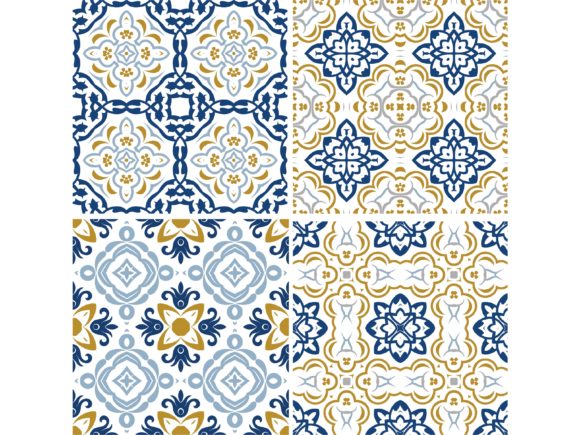
Before discussing how to work with vintage-look tiles, it is worth understanding what distinguishes authentic period tile from modern equivalents. Encaustic cement tiles, a staple of early twentieth-century flooring, are not glazed. Their patterns are formed by pouring pigmented cement into compartmentalized molds, meaning the color runs through the entire thickness of the wear layer. This produces a matte, slightly porous surface that ages by developing a patina rather than wearing away a printed image. A hundred-year-old encaustic floor in a Barcelona entryway will show footfall patterns, subtle color shifts, and a lived-in softness that no factory-finish can replicate.
Porcelain and ceramic tiles from the mid-century took a different path. Glazes were hand-applied or sprayed, resulting in subtle variations across a single batch. The edges were often slightly irregular, and installers used wider grout lines to absorb those inconsistencies. This created a grid rhythm that feels relaxed rather than engineered. Modern rectified tiles, with their laser-cut edges and micro-thin grout joints, produce a seamless plane. The vintage approach produces a visible, rhythmic framework that becomes part of the composition itself.
Glaze Chemistry and Color Depth
One of the most cited differences between true vintage and contemporary tile is the quality of color. Mid-century glazes used lead and other compounds now restricted, yielding oranges that seemed to glow from within, deep teals with surprising complexity, and pinks that read as warm rather than saccharine. Modern ceramicists have developed lead-free formulations that approximate these hues, but the optical behavior is subtly different. The vintage palette tends to have a lower light-reflection value and greater chromatic depth. When selecting reproduction tiles for a Vintage Tile Retro Decor project, examining samples under the actual lighting conditions of the space becomes essential. A tile that looks perfectly retro in a showroom under halogen may flatten out under cool LED or northern daylight.
Pattern Logic and Spatial Perception
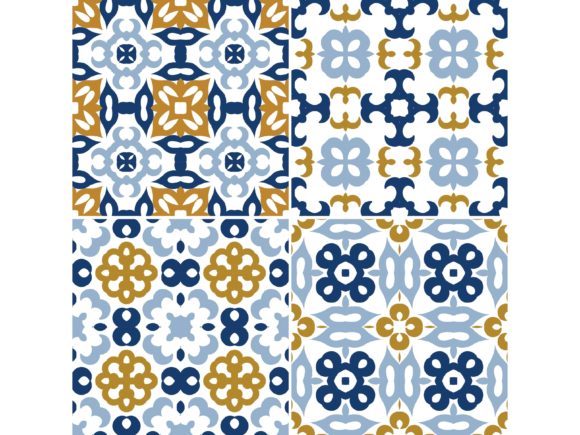
Vintage tile patterns were not randomly decorative. They followed principles inherited from textile design, Islamic geometry, and Victorian architectural theory. A border-and-field composition, where a defined perimeter frame contains a repeating central motif, visually anchors furniture groupings and directs movement. The classic octagon-and-dot mosaic, ubiquitous in early twentieth-century American bathrooms, uses the small inset squares as a counterpoint rhythm that breaks up what would otherwise be a monotonous hexagonal grid. These are spatial tools as much as decorative choices.
Color blocking through tile also functioned as a wayfinding system before open-plan living eliminated walls. A change in tile color or pattern signaled a transition between functional zones — from food preparation to dining, from washing to dressing. In contemporary retro-inspired interiors, designers borrow this technique to create psychological boundaries in lofts and great rooms. A vintage-look encaustic runner through an open kitchen defines the work aisle without a single vertical obstruction.
Scale Relationships and Proportion
Tile dimensions from different eras reflect the manufacturing constraints and design sensibilities of their time. Victorian geometric floors often used tiles in the 4-inch to 6-inch range, creating fine-grained patterns that reward close inspection. Mid-century designs expanded to 8-inch and larger formats, emphasizing bold color fields and simpler geometries. Using Vintage Tile Retro Decor successfully means matching scale to architectural context. A delicate Victorian encaustic pattern can overwhelm a small powder room if the repeat is too large for the floor area. Conversely, oversized mid-century squares can make a compact space feel generously scaled precisely because they reduce visual fragmentation.
Where Vintage Tile Transforms a Room
Kitchens and bathrooms remain the obvious canvases, but the applications have expanded considerably. A backsplash of hand-glazed 4x4 tiles in a buttery yellow, installed with a slight stagger rather than a grid, brings a 1950s diner warmth to a contemporary kitchen without tipping into costume. The key is selective application — a single focal wall, a cooktop surround, or an inset panel rather than floor-to-ceiling coverage.
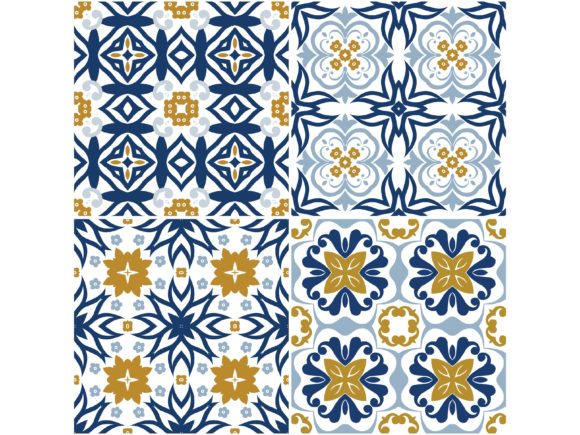
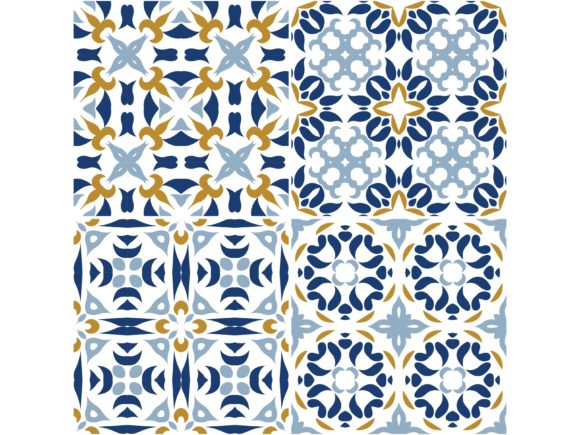
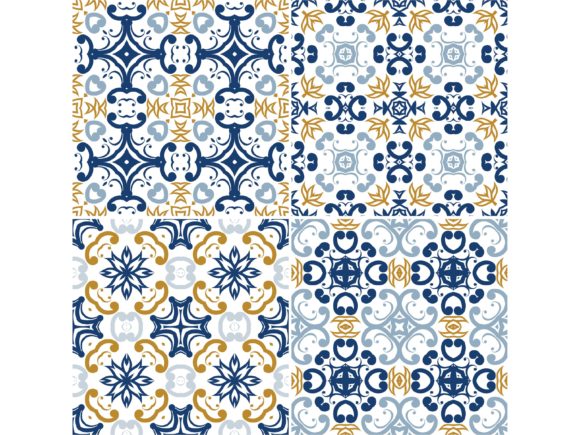
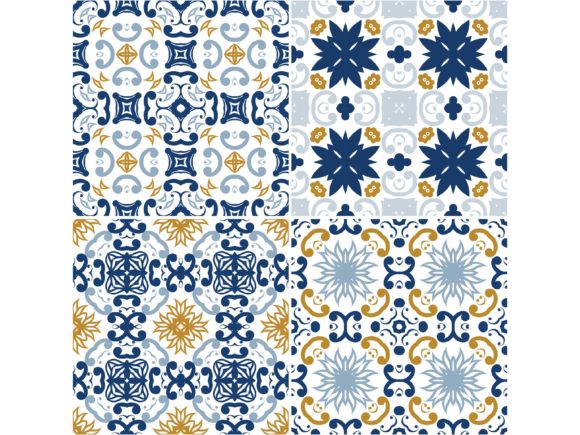
Entryways and mudrooms benefit enormously from patterned vintage-style floor tile. These are high-traffic zones that historically received the most durable and decorative treatment a home could afford. An encaustic-look porcelain tile in a classic Mediterranean or Moorish-inspired geometric pattern hides the dirt tracked in from outside while establishing the home's design vocabulary the moment the door opens. The pattern does the practical work of camouflage, a consideration that original tile-makers understood intimately.
Fireplace surrounds offer another compelling application. Vintage ceramic tiles with crackle glazes, iridescent finishes, or raised relief patterns turn a standard fireplace into the room's gravitational center. Period-appropriate tile work around a hearth also adds authenticity to homes built in the Craftsman, Art Deco, or Mid-Century Modern traditions, where the fireplace surround was often the most ornamentally concentrated surface in the house.
Commercial and Hospitality Contexts
Restaurants, boutique hotels, and retail spaces have driven much of the renewed interest in Vintage Tile Retro Decor. A café with a black-and-white checkerboard floor in matte porcelain immediately signals familiarity and approachability. Boutique hotels use encaustic-patterned bathroom floors to differentiate rooms and create Instagram-worthy moments that serve as organic marketing. The durability of porcelain-bodied vintage-look tiles makes them suitable for commercial foot traffic, while the aesthetic warmth offsets the harder edges of contemporary furniture and lighting.
Installation Considerations Often Overlooked
Working with vintage-look tile involves decisions that go well beyond color and pattern selection. Grout color dramatically shifts the perception of a tile layout. Mid-century installations typically used grout that matched or closely related to the field tile color, producing a unified plane with subtle grid lines. Earlier Victorian and Edwardian geometric floors often used contrasting grout — dark gray or black between lighter tiles — to emphasize the pattern geometry. A designer choosing Vintage Tile Retro Decor for a project should sample at least three grout options before committing, observing how each changes the pattern's visual weight.
Substrate preparation also deserves attention. Many vintage-look tiles, especially larger-format porcelain interpretations of encaustic patterns, require exceptionally flat substrates to prevent lippage. This can mean additional floor leveling compound or backer board work that adds to the project timeline and budget. The irregular edges of truly handcrafted tiles call for installers comfortable with wider grout joints and the patience to adjust alignment piece by piece.
Sealing, Maintenance, and the Patina Question
Authentic encaustic cement tiles require sealing before and after grouting, followed by periodic resealing to maintain stain resistance. Some owners embrace the patina that develops over time — the subtle darkening, the wear patterns, the small chips that accumulate along edges. Others want their floors to remain pristine, which demands a more rigorous maintenance schedule. Porcelain reproductions eliminate much of this upkeep while approximating the look, though they will never develop the same surface character. The choice between authentic material behavior and practical convenience is one every Vintage Tile Retro Decor project must confront honestly.
The Broader Design Ecosystem
Vintage tile does not exist in isolation. It interacts with millwork profiles, paint colors, hardware finishes, and lighting temperature. A 1920s-style hexagonal mosaic floor in a bathroom feels most coherent when the vanity has a slightly raised panel detail, the mirror has a modest bevel, and the sconces emit warm light. The tile sets the period frame, but the supporting elements must respect that frame or the result reads as disjointed rather than curated.
There is also an emerging dialogue between vintage tile and contemporary minimalism. Some of the most striking interiors pair an ornate encaustic floor with stark white walls, simple casework, and minimal furniture. The tile becomes the singular decorative gesture, and its complexity feels intentional rather than busy because nothing else competes for attention. This approach appeals to those who appreciate Vintage Tile Retro Decor but want to avoid a fully period-revival interior.
Sourcing, Authenticity, and Budget Awareness
Original salvaged tile carries a particular cachet and can often be found through architectural salvage yards, online marketplaces, and specialty dealers. The supply is finite, and matching quantities for larger installations may require patience. Reproductions range from mass-produced porcelain lines at big-box retailers to small-batch handcrafted tiles from artisan studios. The price spectrum is accordingly wide, and the visual results vary from convincing to obviously manufactured.
For business owners and designers specifying materials, understanding the difference between vintage-inspired and vintage-reproduction tile matters. The former takes loose cues from period design but modifies scale, color, and finish for contemporary tastes. The latter aims for historical accuracy in every dimension. Both have their place, but conflating them leads to projects that miss their intended mark.
An overlooked aspect of vintage tile is its acoustic contribution. Glazed ceramic and porcelain surfaces reflect sound, contributing to the lively acoustics of mid-century diners and the characteristic echo of old subway stations. In residential spaces, this can be managed with textiles and furnishings, but in large open commercial interiors, the cumulative effect of hard tiled surfaces on reverberation should be calculated early in the design process.
Why the Appeal Endures
Beyond aesthetics, Vintage Tile Retro Decor speaks to a desire for surfaces that feel authored. A hand-glazed tile records the gesture of its maker, the specific chemistry of a particular kiln firing, and the design sensibilities of an era when ornament was not yet stripped away in the name of efficiency. In a world of digitally printed porcelain that can mimic any material with photographic accuracy, there is growing appreciation for tile that is not pretending to be anything other than tile — ceramic, cement, and glaze doing exactly what those materials have done for centuries.
This is not a rejection of technology or contemporary manufacturing. Many of the best vintage-look tiles on the market today are made using advanced digital printing and precision molding, but they deploy those tools in service of visual warmth rather than sterile perfection. The most successful Vintage Tile Retro Decor installations acknowledge this balance, using modern substrates, setting materials, and lighting alongside tile that carries the visual signatures of an earlier craft tradition. The result is neither a museum period room nor a purely contemporary box, but a hybrid that feels genuinely livable — rooted in design history without being trapped by it.